More partners doesn't have to mean more work. How Tracksuit used scoring, signals and automation to point partner managers at the agencies that matter most.
Picture a partner ecosystem with hundreds, even thousands, of agencies. Interest is high and new partners keep coming in. On paper, that looks like a program ready to scale. In practice, the partner team is spread thin, running the same motion with every agency and struggling to know where their time should go.
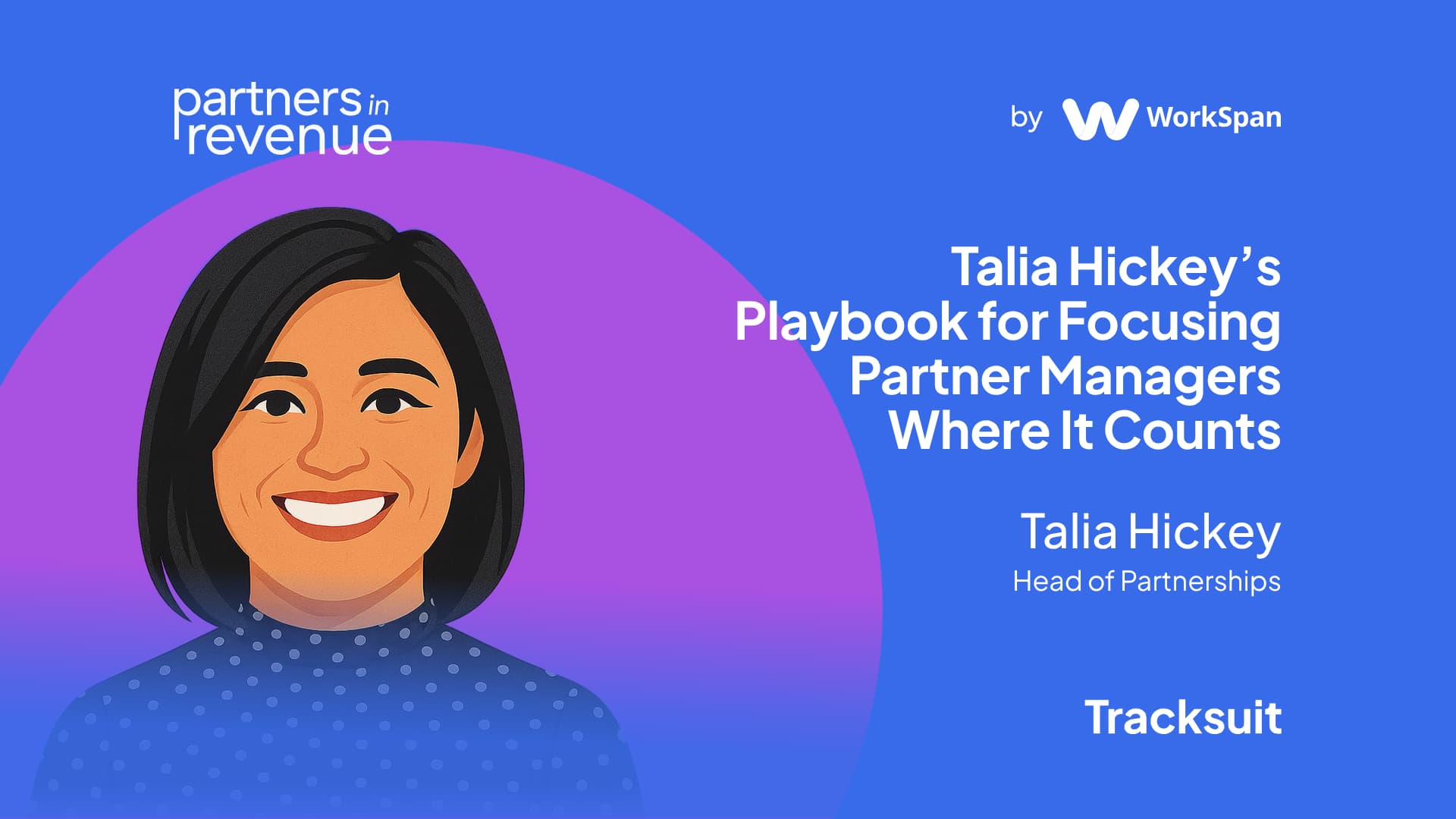
That was the situation Talia Hickey's team faced. Hickey is Head of Partnerships at Tracksuit, the brand tracking platform, where she builds and manages the company's agency partnerships in the US. Before Tracksuit, she worked at Shopify.
Her team's fix wasn't more headcount. It was a clearer view of which partners deserve attention, and less admin standing between partner managers and those partners.
You don't have a scaling problem. You have a segmentation problem.
The first step was naming the problem correctly.
"We recognized that we didn't have a scaling problem. We had lots of volume, we had lots of intent. We had a segmentation problem." — Talia Hickey, Head of Partnerships, Tracksuit
The team had been running a one-size-fits-all approach. Every agency got roughly the same treatment, regardless of what it could become. So Tracksuit committed to what Hickey calls "a data-led prioritization."
"When we've got hundreds or thousands of agencies, we really needed better visibility over who were the right partners that we should be spending time on."
Two scores: what a partner could be, and how it's doing now
Tracksuit built that visibility with two scores.
- Value scoring measures each agency's long-term commercial potential. "Potential being the key word here," Hickey says. Partner managers first set the score by hand for their agencies. Now it's automated, "which is brilliant."
- Health scoring shows where the agency is tracking today: "what is their commercial performance or activity to date, what's their sentiment, so on and so forth."
Together, the two scores separate the partners that are busy right now from the partners worth building around.
Bet on potential, not just activity
With the scores in place, the team ran a segmentation exercise. The key decision was what to weight most.
"We wanted to prioritize future potential as opposed to activity to date."
Tracksuit split its base into two broad groups. Managed agencies get dedicated, one-to-one partner management. Unmanaged agencies don't. The result: partner managers spend their hands-on time where the long-term upside is highest, not just where the most noise is today.
Let signals tell partner managers when to act
Segmentation tells the team who to focus on. Engagement signals tell them when.
Tracksuit layered engagement signals on top of its segments and set up a signals bot that pushes them into Slack, where partner managers can pick them up.
"It's sending out prompts to our team and makes it really easy to flag the right moments and timings to be doubling down on these agencies."
Give partner managers their time back
Knowing where to focus only helps if partner managers have time to act. So Tracksuit also went after the admin that fills a partner manager's day. Two plugins have made the biggest difference, which Hickey calls "a real time saver and game changer" for the team.
- Prep plugin. Produces a tailored brief ahead of any agency touchpoint, customized to the type of meeting and pulling in all historical conversations.
- Post-call plugin. Scans the completed call, extracts any opportunities mentioned, creates them as deals in HubSpot, helps draft the follow-up email and schedules follow-up tasks.
The work still happens. Partner managers just don't have to assemble it by hand before and after every call.
Stop rebuilding enablement from scratch
The second bottleneck was enablement content.
"PMs were still building basic assets, one-pagers, resources for agencies from scratch: reinventing the wheel almost every time."
Tracksuit now uses Sendd to create shareable, trackable, on-brand pages in a short amount of time. Partner managers can get a resource into an agency's hands quickly, the agency gets a better experience, and the team can update the content in real time.
"It doesn't mean that content is living in a static PDF, living and dying in an inbox."
The through-line
Hickey's playbook comes down to focus. Name the real problem. Score partners on both potential and current health. Put dedicated management behind the agencies with the most upside. Use signals to time the outreach. Then automate the admin, so partner managers have room for the work that needs a person.
"It's really freed up a lot of their capacity to do the fun, creative, relationship-building work with their partners, and it's really exciting to see."
WorkSpan is built for partner teams like Hickey's that want to scale without spreading people thin. It puts partner plays and intelligence in the seller's flow of work, ties partner attribution to the CRM and helps teams run co-sell execution at scale, so partner managers spend less time on admin and more time on the relationships that drive revenue.
Talia Hickey is Head of Partnerships at Tracksuit, the brand tracking platform, where she builds and manages agency partnerships in the US. She was previously at Shopify. Thanks to Talia for sharing her playbook with WorkSpan.